

Caring for Cats, Cat Health, Pets
Dehydration in Cats: Signs and How To Help?
Jul
Summer Laziness or Hidden Danger? Save Your Cat!
42°C in Lahore. 44°C in Multan. Add Karachi’s heat and load shedding, and it feels unbearable. We keep our tumbler close and stay hydrated all day. But what about dehydration in cats? Do they have a tumbler too? She cannot open the fridge. Cannot call someone for water. Cannot even tell you what she is feeling. She just quietly sits in a corner, eyes look tensed, fur a little flat, barely moving. And you think she is just tired from the heat. Come, let’s talk about what to watch for, how to test at home right now, and what fixes it.
Dehydration in Cats During Summer is Predictable
Cats lose fluids constantly through breathing, urination, and panting, but the internal signal to drink does not kick in fast enough to keep up.
- Lose 5% of body fluid and you can witness the signs.
- At 10 to 12%, organ failure starts.
Dehydration in Winter is Possible Too!
Cold weather makes cats drink even less, sick cat not drinking water, and people forget to refresh bowls. But summer is where I see the real emergencies walk through my clinic door.
Symptoms of Dehydration in Cats: Read This Carefully
These signs of dehydration in cats show up before things get critical.You might let them go!
- Skin that tents between her shoulder blades and does not revert back within 1 second
- Gums that feel dry, sticky, or tacky rather than slippery and wet
- Eyes looking sunken, dull, or less bright than their usual self
- Lying flat with zero interest in food, play, or movement
- Grooming stopped completely (a clean cat who stops cleaning herself is sending a signal)
- Litter box showing smaller, darker urine clumps than usual
- Refusing food, especially wet food she normally finishes quickly
- Saliva that looks thick or stringy instead of normal
How to Check if Cat is Dehydrated at Home
Run these two tests at home before anything else:
Skin Turgor Test:
Gently pinch the skin between the shoulder blades and let go. Healthy, hydrated skin bounces back in under a second. Dehydrated skin tents upward or slides back slowly. Worse the tent, worse the dehydration.
Gum Test:
Lift the lip and press one finger on the gum for two seconds. Release and watch. Color should return within two seconds. Anything longer points to poor circulation and fluid depletion.
Cat Breeds at Higher Risk of Dehydration
Every domestic cat risks dehydration but these breeds carry it at a deeper genetic level due to kidney and metabolic disease predispositions.
| Breed | Primary Risk | Why Dehydration Happens |
| Persian | Polycystic Kidney Disease (PKD) | Damaged kidneys dump fluids rapidly, cannot retain water |
| Siamese | CKD and Amyloidosis | Organ damage triggers constant, accelerated fluid loss |
| Maine Coon | CKD predisposition | Declining renal function pushes excessive urination |
| British Shorthair | PKD and renal cysts | Cyst growth disrupts the body’s fluid balance |
| Burmese | Hypokalemia and Diabetes | Elevated blood sugar forces water out through urination |
| Abyssinian | Renal Amyloidosis | Protein deposits destroy kidney filters, immediate fluid loss |
Owners of these breeds should monitor dehydration in cats year-round, not just in summer.
What Causes Dehydration in Cats
- Dry kibble only diet with zero wet food in the routine
- Vomiting
- Diarrhea
- Fever from any infection or illness
- Kidney disease, diabetes, or hyperthyroidism
- Hot environment with no cool resting area during peak hours
- Stale, warm, or dirty water the cat refuses to touch
- Stress from moving homes, new pets, or loud environments reducing intake
Treating Mild Dehydration in Cats at Home
Here is the answer for how to hydrate a sick cat:
- Place fresh cool water in three or four spots around the house, not just one
- Switch to wet cat food for hydration right away up to 80% moisture content means she gets fluids through every meal without needing to drink separately
- Mix a little plain water or unsalted chicken broth into dry kibble to add moisture
- Move water bowls away from the litter box and food (cats avoid drinking near either)
- A moving water source works better than a still bowl (cats drink significantly more from fountains)
Moderate or severe dehydration ⇛⇛⇛IV or subcutaneous fluids are the only answer at that point.
Prevention: Before the Emergency Happens
Make the Switch: Hydrate Through the Bowl
Feed wet food daily. Pouches and canned food carry 70 to 80% moisture. A cat on wet food daily is already getting most of her hydration through meals.
- Royal Canin
- Whiskas, Wanpy
- Felix pouches
Many more best cat food are available at petshub.pk with cash on delivery across Pakistan.
Divide the Supply: Multiply the Water Stations
Multiple water bowls across the house. One bowl in the kitchen is not enough, especially in a large home or during summer.
The Cleanliness Rule: Wash Daily to Beat the Sniff Test
Wash bowls every single day. Cats smell bacteria in water that humans cannot. A bowl that looks clean to you may smell off to her and she will skip it entirely.
Go Flowing: Upgrade to a Pet Water Fountain
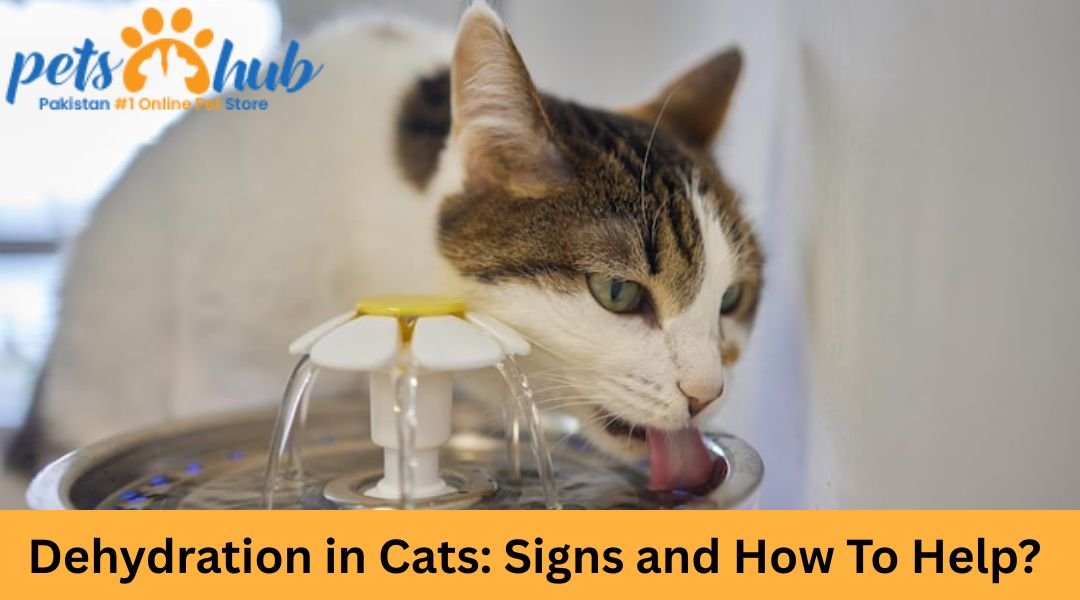
Get a water fountain and its fun playing with too. Moving, oxygenated water stays cooler and attracts cats to drink far more than standing water does.
Beat the Peak: Keep a Cool Zone Open
Keep one cool room accessible during peak hours. A cat in a hot room loses fluids faster even when drinking normally.
Smart Solutions for a Happy, Hydrated Cat
Dehydration in cats is among the most preventable things I treat and still one of the most common, because the early signs are too quiet to notice until they are not.
Petshub.pk delivers wet cat food, vet diet food, and water fountains to your door. Same day in Lahore. Next day Islamabad. 1 to 3 days across Pakistan. Cash on delivery available.
Because a properly hydrated cat is the one waking you up at 3am demanding breakfast. And truly, that is the version you want back.
FAQs
How do I check if my cat is dehydrated at home?
Grab the skin between her shoulder blades, lift it gently, let go. Hydrated skin falls right back. Dehydrated skin sits there for a second before moving. Check her gums too, wet and slippery is good, dry or tacky means trouble.
Does dry food cause dehydration in cats?
Honestly, yes and this surprises a lot of people. Dry kibble carries around 10% moisture, which is almost nothing. A cat eating only dry food needs to drink quite a lot of water to make up for it, and most simply do not. Adding one wet meal a day genuinely makes a difference.
How much water does a cat actually need in a day?
Around 50ml for every kilogram of body weight. So a 4kg cat needs roughly 200ml daily.
Is Pakistani summer actually dangerous for cats?
More than most people take seriously. When it is 42 degrees and the AC goes out, a cat on dry food with one warm bowl of water nearby can dehydrate within hours. Lahore, Multan, Karachi, the heat in these cities during June and July is no joke for a small animal who already does not drink enough naturally.
